English
 Español
 Français
 China
China

Preventing Die Bounce on Your Roll Die Punching Machine
You’re running a high-speed job on your roll die punching line, and the cut edges look wrong. Double impressions. Wavy edges. The cup fans don‘t stack properly, and the reject pile is growing.
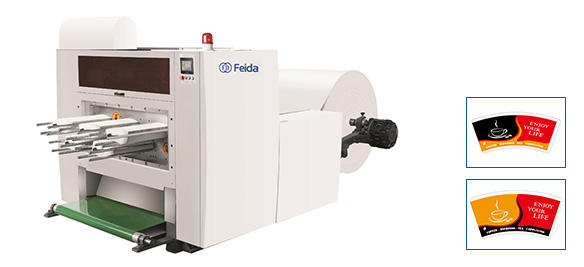
Die bounce is the culprit. It happens when the die rebounds after impact, creating a secondary impression that compromises cut quality. At high speeds—up to 380 punches per minute—the problem becomes critical. Your Roll Die Punching Machine is capable of impressive productivity, but die bounce can turn a high-speed run into a quality nightmare.
This article walks you through the physics behind die bounce, the five conditions that trigger it, how to diagnose it without complex tools, and practical prevention methods that keep your line running clean. For production managers and equipment operators, this is practical knowledge for eliminating a common—and costly—defect.
The Physics Behind Die Bounce
Die bounce isn’t random. It’s a predictable mechanical response to high-speed operation.
Why High Speed Creates Upward Force
At high speeds, the die and anvil separate rapidly after each cut. The sudden release creates a rebound effect—the die bounces back toward the material, creating a secondary impression before the next cycle. This is similar to a hammer striking a surface and bouncing back. The faster the machine runs, the more pronounced the bounce. Machines running at 280-380 punches per minute are particularly susceptible.
The Role of Anvil Cover Hardness
The anvil cover—the surface that the die presses against—affects bounce. A softer anvil absorbs more energy, reducing bounce. A harder anvil transfers more energy back to the die, increasing the rebound effect. This is why the durometer (hardness) of the anvil cover matters. For thin papers, a harder anvil cover is often needed to get a clean cut—but it also increases bounce risk.
Momentum and Inertia
The rotating die and anvil have momentum. At high speeds, the inertia of the system works against clean cutting. The die wants to keep moving, and the material wants to spring back. Managing this interaction is the key to preventing bounce.
The 5 Conditions That Trigger Die Bounce
Die bounce doesn’t happen without a reason. Here are the five most common triggers.
1 – Excessive Die Cutting Clearance
The gap between the die and the anvil is critical. If the clearance is too large, the material isn‘t cut cleanly—it’s pinched. The die rebounds more violently, creating bounce. For paper cup fan stock (150-400gsm), clearance should be minimal—just enough to allow the material to pass without crushing the fibers.
2 – Worn or Uneven Anvil Blanket
The anvil blanket provides the cutting surface. Over time, it develops flat spots, dents, or uneven wear. An uneven surface creates inconsistent contact pressure, which increases the likelihood of die bounce. Feida Machinery’s roll die punching machines are built with high-quality imported components for reliability, but even the best anvil blanket needs regular inspection and replacement.
3 – Insufficient Magnetic Hold on Flexible Dies
Flexible dies are held in place by magnets on the die cylinder. If the magnetic hold is weak—due to wear, debris, or a faulty magnet—the die can lift slightly during the cut. This lift creates the space for bounce. Check the magnetic hold regularly and clean the die cylinder surface to ensure full contact.
4 – Machine Speed Exceeding the Die’s Design Limit
Every die has a maximum operating speed. Running beyond it invites bounce. The machine may be capable of 380 punches per minute, but if the die is designed for 250, you‘ll see bounce at higher speeds. Feida’s equipment is designed for high-speed operation up to 380 punches per minute, but the die itself must match the machine‘s capability.
5 – Paper with High Moisture Content
Paper absorbs moisture from the air. High moisture content makes the paper more elastic and less brittle. Instead of cutting cleanly, it deforms and springs back—creating the conditions for bounce. For paper cup fan stock, moisture content should be kept below 8%.
Diagnosing Die Bounce Without Complex Tools
You don’t need expensive equipment to confirm die bounce. A few simple checks will tell you what’s happening.
Visual Inspection Under Magnification
Use a magnifying glass or loupe to examine the cut edge of the rejected cup fans. Die bounce creates a distinctive pattern: a double impression, a wavy edge, or an uneven cut line that shows two distinct contact points. If you see a ghost image of the cut rule next to the actual cut, you’re looking at bounce. Chipping, in contrast, appears as small, irregular missing pieces along the edge, not a secondary impression.
The Speed Reduction Test
Reduce the machine speed by 10-15% and run a small batch. If the cut quality improves, die bounce was the problem. This test confirms that speed is a factor—and that adjusting speed can be part of the solution. Feida’s roll die punching machines achieve up to 380 punches per minute, but the optimum speed depends on the material and die condition.
Anvil Blanket Flatness Check
Run your hand across the anvil blanket. You’re feeling for flat spots—areas that are lower than the surrounding surface. If the blanket has uneven wear, it’s time to replace it. Even a small flat spot can cause localized bounce.
Practical Prevention Methods That Work
Once you’ve identified die bounce as the problem, here’s how to stop it.
Switch to a Harder Anvil Cover for Thin Paper
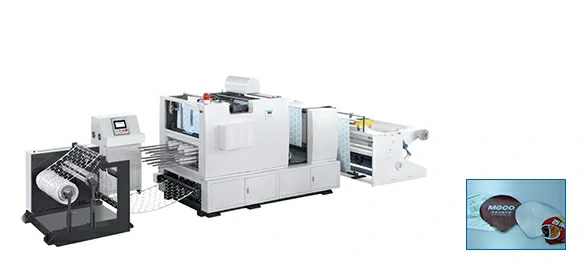
For thin papers (60-120gsm, like the aluminum foil lid stock), a harder anvil cover reduces the rebound effect. The harder surface supports the cut without allowing the die to sink in and spring back. For thicker papers (150-400gsm), a softer cover may be better. Feida’s Aluminum Lid Roll Die Punching Machine is designed for thickness ≥0.06mm (aluminum foil, laminated paper, plain aluminum)—matching the anvil hardness to the material is critical.
H3: Add Anti-Bounce Serrations on the Die Rule
Anti-bounce serrations are small teeth added to the cutting rule. They create a series of small puncture points instead of a single continuous cut, reducing the force that causes bounce. This is a die modification, not a machine adjustment—it requires a new die or a die re-grind. For high-speed paper cup fan production, it’s a proven solution.
Reduce Die Cutting Pressure Slightly
Sometimes the pressure is simply too high. Excessive pressure compresses the material and the anvil more than necessary, creating more rebound. Reduce the pressure incrementally—5% at a time—and check the cut quality. The minimum pressure that achieves a clean cut is the optimum setting. Feida’s equipment features hydraulic precise control for reduced maintenance and optimal performance, making pressure adjustments straightforward.
Record Speed and Material Combinations
Document the speed settings that work for each material type. For 150-200gsm paper, you might find that 320 punches per minute is the sweet spot. For 250-350gsm, 280 punches per minute may be the limit. Use the machine’s intuitive touch screen interface to save these settings for quick recall on future runs. Feida’s roll die punching machines feature an intuitive touch screen interface that ease of operation reduces errors for efficient production.
Questions Shop Floor Operators Ask
Can die bounce damage the machine permanently?
Yes—if it continues over time. The repeated impact from die bounce transfers vibration through the die cylinder, bearings, and drive train. Over months of operation, this can cause premature bearing wear, misalignment, and increased play in the mechanical system. Catching and fixing die bounce early protects both your product quality and your machine’s lifespan. Feida’s machines are built with high-quality imported components to ensure reliability and durability, but even the best machine needs proper operation to stay that way.
Does a new die always bounce less than a resharpened one?
Not necessarily. The key factor is the die’s sharpness and geometry. A resharpened die that maintains the correct cutting angle and anti-bounce features can perform as well as a new die. The problem is more likely with dies that have been resharpened incorrectly—losing the anti-bounce serrations or altering the cutting angle. A poorly resharpened die will bounce regardless of its age.
How can you tell the difference between die bounce and simple chipping?
Die bounce creates a secondary impression—a ghost cut or wavy edge that runs parallel to the primary cut. Chipping is the loss of small pieces along the cut edge, creating an irregular, jagged line. The easiest way to tell: look at the edge under magnification. If you see two distinct lines, it’s bounce. If you see missing pieces, it’s chipping.
Building a Bounce-Free Production Routine
Die bounce is preventable with the right approach and consistent attention to key variables.
Start with the Right Machine Setup
Feida’s Aluminum Lid Roll Die Punching Machine is designed for cutting thickness ≥0.06mm (aluminum foil, laminated paper, plain aluminum). But even the best machine needs proper setup. Check the die clearance, anvil blanket condition, and magnetic hold before every production run.
Monitor Speed vs. Material
The machine is capable of 280-380 punches per minute for paper and 100-200 punches per minute for aluminum lid stock. These speeds are not interchangeable—aluminum and laminated materials require slower speeds to avoid bounce. Use the machine’s touch screen interface to set and save the right parameters for each material type.
Inspect the Anvil Blanket Regularly
Anvil blankets wear unevenly. Regular inspection catches flat spots before they cause problems. For high-volume production, replace the anvil blanket at regular intervals rather than waiting for quality issues to appear. Feida’s roll die punching machines are built with precision cutting capability of ±0.20mm, but that precision depends on the cutting surface being in good condition.
Feida Machinery manufactures roll die punching machines designed for high-speed punching of paper, cardboard, and other materials. The Aluminum Lid Roll Die Punching Machine is suitable for cutting thickness 60-120g ice-cream paper corn holders, ice-cream lids (aluminum foil), instant-noodle bowl caps, and all kinds of food packaging and paper cup lids. The equipment has the function of automatic collection, operates at 100-200 punches per minute for aluminum lid stock, and achieves cutting precision of ±0.20mm.
Feida provides comprehensive support: high precision CNC machine tools, a professional assembly and design team, customizable machines, machine accessories, installation and maintenance, remote troubleshooting, and 24-hour online consultation. For production managers dealing with die bounce, having access to responsive technical support makes a real difference.
Die bounce is a common problem on high-speed roll die punching machines, but it’s not a mystery. It comes from the physics of high-speed impact—and it’s triggered by five specific conditions: excessive clearance, worn anvil blankets, weak magnetic hold, excessive speed, or high moisture content. With the right diagnosis and the prevention methods outlined above, you can eliminate bounce from your production line and keep your cup fans clean and consistent.
Ready to eliminate die bounce on your roll die punching line? Reach out to Feida Machinery’s technical team—they can provide die recommendations, anvil blanket guidance, and machine-specific setup tips to keep your production running clean.