English
 Español
 Français
 China
China

8 Common Questions About Maintaining High Speed Roll Die Cutting Machine Bearings
Your high‑speed roll die cutting line is running 16 hours a day, punching out paper boxes, labels, or paper cups. The flexo printing unit is laying down crisp colors, the die is rotating at full speed, everything looks fine—until the anvil bearing starts squealing. By the time you notice the noise, the bearing may already be damaged, and a simple lubrication job has turned into an hour of downtime.
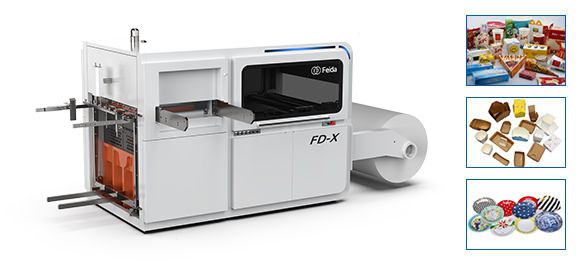
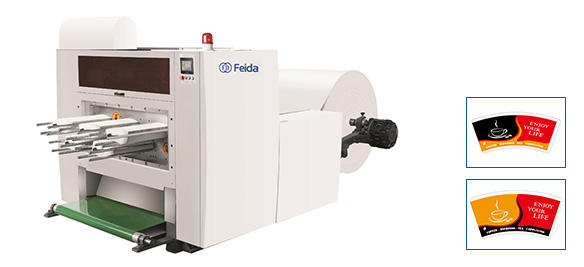
Bearings are the most overlooked but most critical components on a roll die cutting machine. The FD series from Feida Machinery operates at production speeds up to 180 cuts per minute, with cutting precision of ±0.10‑0.20mm and flexo print units up to 6 colors. At those speeds, even a small bearing issue translates into misaligned cuts, material waste, and costly stops.
The good news is that most bearing problems are preventable with a straightforward maintenance routine. This article answers the eight questions maintenance engineers ask most often: lubrication frequency, grease types, noise causes, replacement decisions, bearing life expectancy, failure warning signs, safe lubrication practices, and weekly inspection checklists.
How often should I lubricate the main bearings?
Let’s start with the most common question. The answer depends on your machine’s operating hours, not calendar days.
Lubrication intervals based on run time
The industry standard for high‑speed industrial bearings is to lubricate every 500 operating hours—not every day, not every week. Some users reference a schedule of lubricating the rollers and die with bearing grease after each 8 hours of operation, and lubricating the bearings themselves once a week. However, for bearings operating in the high speed range (often defined as a Dn value of 150,000 to 200,000 or more), the grease in the component channels is subjected to harsh operating conditions, requiring more frequent attention.
A practical rule for roll die cutters running 16‑hour shifts: lubricate main bearings every two weeks, or roughly every 150‑200 operating hours. Regardless of actual runtime, roller bearings must be regreased at least every 12 months. For Feida‘s FD series machines, which run up to 180 cuts/minute, err on the side of more frequent lubrication—especially during hot summer months when ambient temperatures accelerate grease degradation.
Why run time matters more than calendar days
A machine running 8 hours per shift needs far less frequent lubrication than a machine running back‑to‑back shifts seven days a week. Basing your schedule on operating hours rather than calendar days ensures you’re lubricating based on actual wear, not just habit.
Create a simple counter log next to the machine. Record the hour meter reading every time you lubricate. The next lubrication is due after the next 500 hours—not the same day next month.
What type of grease is safe for high speed roll die cutting machine bearings?
Not all greases work at high rotational speeds. Using the wrong grease is almost as bad as using no grease at all.
Recommended grease grades
For high speed industrial bearings operating at speeds common in roll die cutting (shaft speeds often several thousand RPM), an NLGI Grade 2 grease is the standard. NLGI 2 is used in ball and roller bearings operating at speeds up to 10,000 rpm. It‘s also suitable for sealed bearings where “silent operation” is required—important for anvil bearings that need to run without generating noise.
For the thickener chemistry, two types dominate the market: lithium complex and polyurea. Lithium complex is the most common thickener on the market, making up nearly 60 percent of greases available. Polyurea greases can have three to five times better life expectancy than lithium‑based greases, but they are more expensive and less compatible with other grease types. If you’re switching grease types, complete a full purge first—mixing different thickeners can cause chemical incompatibility that turns the grease into a thick paste.
What to avoid
Avoid general‑purpose greases with high oil separation rates. Avoid mixing different thickener types (lithium and polyurea don‘t mix well). And never use grease that has been sitting in a dusty open container—contaminated grease damages bearings faster than running dry.
For most roll die cutting applications, a high‑quality lithium complex NLGI 2 grease is perfectly adequate and cost‑effective. For extreme high speed applications or bearings that run near their temperature limits, consider a synthetic polyurea grease.
Why does my anvil bearing make a squeaking noise?
A squeaking anvil bearing is not normal. It’s a warning signal that something is wrong.
The two most common causes
Inadequate lubrication is the leading cause of premature bearing failure, as it leads to increased friction, heat generation, and sticking. When a bearing squeaks, the first thing to check is whether it has been lubricated on schedule. Pump fresh grease into the fitting while rotating the shaft slowly. If the noise disappears within a few minutes, you have your answer.
The second cause is misalignment. The anvil rolls provide support for the material being cut and must be in good condition to ensure accurate die cutting. If the anvil roll is not parallel to the die roll, the bearing experiences uneven side loading that generates noise even with proper lubrication. Check alignment with a feeler gauge and adjust the bearing housing position if necessary.
When noise means serious trouble
If lubrication and alignment checks don‘t eliminate the noise, the bearing may already have internal damage. Contaminants create indentations on rolling elements, which generate noise that varies in intensity and frequency with the extent of damage. At this stage, a bearing replacement is likely required, not just maintenance.
Can I replace bearings myself or do I need a technician?
This depends on your machine size and your in‑house capabilities.
When DIY is practical
For smaller machines with accessible bearing housings and standard bearing sizes, an experienced maintenance mechanic can replace bearings. The process requires basic tools: pullers to remove old bearings, clean housing bores, fresh grease, and a torque wrench for reassembly. On Feida‘s FD series, bearing replacement is straightforward on the smaller models (FD970x550), but always refer to the manufacturer’s manual before attempting.
When to call a professional
For large‑frame machines or when the bearing is integral to a precision assembly (like the anvil roll mounting), call a factory‑trained technician. Improper installation—hammering bearings onto shafts, using the wrong interference fit, or failing to preload correctly—shortens bearing life dramatically. In some anvil roll designs, the bearing cylinders cannot be removed radially without removing the entire anvil roll assembly with a crane. If your machine requires that level of disassembly, it‘s a job for professionals.
The best approach: keep a spare bearing kit on hand for your most common bearing sizes. When a bearing fails, you have the part ready. But still consider whether your team has done the job before. If not, bring in a technician and have your mechanic assist as training.
What is the typical lifespan of bearings under high speed operation?
Bearing life varies widely, but you should have a reasonable expectation.
Factors that shorten bearing life
Cleanliness is the biggest variable. Dust and paper fibers are unavoidable in a die‑cutting environment. Contaminated bearings fail early. The second factor is overload. Running the machine at or above its rated speed continuously accelerates bearing wear. The third factor is lubrication quality—using the wrong grease or missing lubrication intervals cuts bearing life by half or more.
What lifespan to expect
Under ideal conditions—clean environment, proper lubrication on schedule, running within rated speed—the main bearings on a high‑speed roll die cutter should last 5‑10 years or 15,000‑20,000 operating hours. In demanding production environments with significant dust, humidity, or temperature extremes, expect 2‑5 years. If you‘re replacing bearings annually, something in your maintenance routine needs improvement.
Below is a quick reference table for bearing life factors:
| Factor | Good Condition | Problem Condition | Effect on Life |
|---|---|---|---|
| Lubrication | On schedule, proper grease | Missed intervals, wrong grease | Can reduce life 50‑80% |
| Contamination | Sealed housing, clean air | Dust ingress, paper fibers | Can reduce life 70% |
| Alignment | Within spec | Misaligned anvil roll | Causes uneven wear, premature failure |
| Load | Within rated speed | Over‑speeding or over‑pressure | Accelerates fatigue |
| Environment | Climate‑controlled | High heat, humidity, dust | Shortens by 30‑50% |
How do I know if a bearing is about to fail?
By the time a bearing fails catastrophically, the damage is done. The goal is to catch it early.
The four warning signs
Temperature rise is the most objective indicator. A bearing that runs significantly hotter than its neighbors—say, 15‑20°C above normal operating temperature—is telling you something. In bearing failure progression, as defects become obvious, there is a significant temperature increase, and later stages show very high vibration before total failure. For anvil bearings in particular, a sudden temperature spike often means the lubrication has broken down or the bearing is overloaded.
Unusual vibration is another key sign. As defects develop on raceways, vibration becomes detectable, first at the bearing’s fundamental rotational frequency, then at harmonics. Increased vibration, especially at rotational frequencies or harmonics, can indicate bearing wear (increased clearance) or oil film instability.
Audible noise changes progressively. A bearing that has become noisier over time—not suddenly, but gradually—is wearing internally. A “whistling” sound often means insufficient lubrication or friction.
Physical inspection during scheduled downtime is also essential. Check for play by attempting to move the shaft radially by hand. Any perceptible movement indicates wear beyond acceptable limits.
Is it necessary to lubricate bearings during a production run?
The simple answer: never.
The safety rule
You should perform maintenance work on the machine only when it is stopped and locked out. The only operation permissible while the machine is running is regreasing roller bearings through centralized lubrication systems with the machine rotating. Even then, the manufacturer recommends that when performing maintenance work, you should comply with the five safety rules of electrical safety—disconnect, secure against reclosing, verify absence of voltage, ground and short‑circuit, cover nearby live parts.
The practical exception
Some centralized lubrication systems are designed to inject small amounts of grease while the machine is operating. These systems use a timed pump that adds grease at set intervals during the production run. If your machine has such a system, follow the manufacturer’s instructions. But for manual lubrication with a grease gun, the machine should be stopped. Rotating shafts and greasing fittings don‘t mix well—gloves or tools can get caught, and over‑greasing while the bearing is spinning can damage seals.
What should I include in a weekly bearing check?
Weekly checks take fifteen minutes and catch problems before they cause downtime.
The three‑part inspection
Listen before you start. At the beginning of the week, before the machine has run at full speed, walk the length of the machine and listen to each bearing location. A bearing that squeaks, grinds, or sounds different than it did last week needs attention.
Touch for temperature. After the machine has been running for an hour—at operating temperature—touch the bearing housings. They should be warm but not painful to hold. Use an infrared thermometer for a more objective check. Document baseline temperatures when the bearings are new or freshly lubricated.
Look at the seals. For sealed bearings, inspect the seals for wear or damage. Also check for oil leakage or grease purging that indicates seal degradation. If you see grease leaking past a seal, you’ve either over‑greased or the seal is failing.
The weekly checklist
-
Listen for unusual noise at each bearing station
-
Measure and record bearing housing temperature
-
Inspect seals for cracks or leaks
-
Check for visible grease leakage or purging
-
Verify that no dust or paper fibers have accumulated around bearing housings
-
If accessible, rotate the shaft slowly by hand and feel for uneven resistance
Quick reference – bearing maintenance log template
The most effective maintenance programs aren‘t about expensive tools—they’re about consistent documentation. A simple log sheet, updated every time you lubricate or inspect, tells you when bearings are trending toward failure before they actually fail.
Below is a practical maintenance log template you can adapt for your Feida roll die cutter:
| Date | Operating Hours | Bearing Location | Lubrication | Temp (°C) | Noise (Y/N) | Notes / Observations | Tech Initials |
|---|---|---|---|---|---|---|---|
| _____ | _____ | LH Main | Yes / No | _____ | _____ | _____ | _____ |
| _____ | _____ | RH Main | Yes / No | _____ | _____ | _____ | _____ |
| _____ | _____ | Anvil LH | Yes / No | _____ | _____ | _____ | _____ |
| _____ | _____ | Anvil RH | Yes / No | _____ | _____ | _____ | _____ |
Keep this log posted next to the machine or in a maintenance binder. Review it monthly for trends: a bearing whose operating temperature has increased 5°C over three months needs attention, even if it hasn‘t reached an alarm threshold yet.
Some maintenance software includes preventative maintenance checklists for bearings with inspection frequencies ranging from daily visual checks to monthly vibration analysis. Even without software, a paper log is infinitely better than no log at all.
preventive bearing maintenance pays for itself
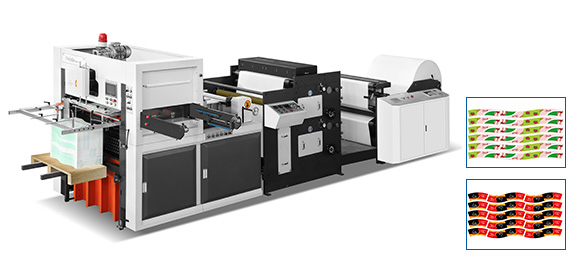
A roll die cutting machine that receives proper bearing care runs longer, cuts cleaner, and surprises you less often. The FD series from Feida Machinery offers cutting precision down to ±0.10mm and production speeds up to 180 cuts per minute, with integrated flexo printing up to 6 colors. Those capabilities are wasted if a failed bearing causes misregistration or downtime.
The maintenance routine outlined here isn‘t complicated or expensive. Lubricate on a 500‑hour schedule using NLGI Grade 2 grease. Listen, touch, and look every week. Document temperatures and observations. Replace bearings when they show clear warning signs—not after they’ve seized.
The cost of a bearing replacement is measured in hours of downtime and the part itself. The cost of a missed lubrication interval is measured in lost production, scrapped material, and frustrated customers. Choose accordingly.
Looking for a preventive maintenance schedule tailored to your Feida roll die cutter? Contact Feida Machinery with your machine model (FD970x550 or other FD series), typical operating hours per day, and any existing bearing issues. Their technical team can provide a lubrication schedule, spare bearing part numbers, and printable log sheets for your maintenance team.