English
 Español
 Français
 China
China

Is a Flexo Printing Machine the Right Choice for Food Packaging?
You're looking at printing equipment for your packaging operation, and the options can feel overwhelming—gravure, offset, digital, flexo. Each has its strengths, but when it comes to food packaging and flexible materials, a flexo printing machine consistently rises to the top. The global flexographic printing market is projected to reach $4.35 billion in 2026, driven by the technology's versatility across substrates like paper, film, and foil. This article walks through what makes a flexo press suitable for fast food paper packaging, the key specifications that determine print quality and productivity, and how features like ceramic anilox rollers and automatic tension control translate to consistent results on your production floor.
First Questions About Flexo Printing for Packaging
Two Practical Concerns—Answered Directly
Q: What substrates can this flexo press handle?
A: The press handles a wide range of flexible substrates used in food packaging—paper, paperboard, plastic films, and metallic films. This versatility is one of flexo's primary advantages over other printing methods.
Q: What's the real-world print quality like compared to other methods?
A: Modern flexo technology can achieve visual parity with gravure, offset, and digital printing. With precision of ±0.15mm and ceramic anilox rollers delivering consistent ink transfer, the results are predictable and repeatable run after run.
The Food Packaging Advantage — Why Flexo Leads the Market
Food packaging demands print quality that catches the consumer's eye, materials that meet safety standards, and production speeds that keep lines moving. Flexographic printing delivers on all three counts. The global flexo and gravure printing market is projected to reach $358.5 billion in 2026, with flexo accounting for $250.7 billion—a clear indicator of the technology's dominance in packaging applications. The press handles paper, paperboard, and flexible films with equal capability, making it the go-to choice for converters serving the food industry.
What Makes Flexo Suitable for Food Packaging
The elasticity of photopolymer plates cushions contact with the substrate, allowing flexo to print on materials where other methods physically fail. This is particularly valuable for food packaging, which often uses lightweight papers and films that can be damaged by rigid printing plates. The result is clean, consistent prints on the materials food packagers actually use.
Speed and Efficiency in Production
Modern flexo presses can achieve job changeovers in minutes while maintaining the benefits of high-speed production for longer runs. For converters running multiple food packaging jobs—different bag sizes, different brands, different print designs—this flexibility translates to reduced downtime and higher throughput.
Core Components That Define Print Quality
The print quality of a flexo press depends on the precision of its components and the control systems that govern them:
Ceramic Anilox Rollers for Consistent Ink Transfer
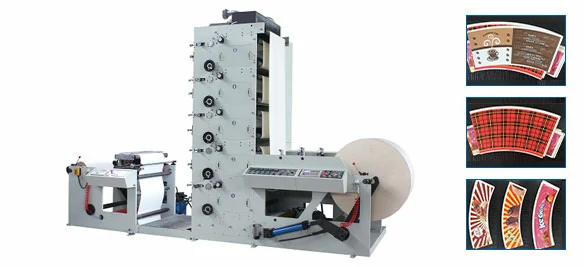
The press features ceramic anilox rollers—one set of four—that deliver consistent ink volume to the printing plate. Unlike chrome rollers that wear over time, ceramic anilox rollers maintain their cell structure across extended production runs, ensuring color consistency from the first impression to the last. LPI (lines per inch) is specified by the buyer, allowing customization for different ink types and substrate requirements.
Helical Gears for Smooth Operation
The printing units use helical gears, which provide smoother and quieter operation than straight-cut gears. This reduces vibration during printing, which directly contributes to sharper print quality and reduced gear marking on the finished product.
Single Side Doctor Blade for Precise Ink Metering
The single side doctor blade system ensures precise ink metering on the anilox roller, removing excess ink and delivering only what's needed for clean, consistent prints. This reduces ink consumption and minimizes the risk of ink splatter or pooling on the substrate.
Web Handling — Keeping Material Under Control
A printing press is only as good as its ability to handle the web from start to finish. The Feida flexo press incorporates several systems to maintain consistent web control:
Automatic Tension Control on Unwind and Rewind
The press features automatic tension control systems on both the unwinding and rewinding sections. Consistent tension is critical for maintaining registration across multiple colors—any variation causes misalignment. The system adjusts automatically, eliminating the need for constant operator intervention.
Auto Web Guiding With Splicing Table
The auto web guiding system includes a splicing table for roll changes. Detection mode is edge checking with precision of ±0.1mm, ensuring that the web stays aligned through the entire print process. The splicing table allows operators to prepare the next roll while the current one is running, reducing downtime between roll changes.
Hydraulic Loading and Unloading
The unwinding and rewinding units feature automatic loading and unloading by hydraulic system. This reduces manual labor and speeds up roll changes, particularly important for heavy rolls up to 1200mm diameter.
Technical Specifications — Flexo Printing Machine at a Glance
| Parameter | Specification |
|---|---|
| Model | Fast food paper packaging flexo printing machine |
| Printing Units | 4 units |
| Max. Web Width | 950mm |
| Max. Printing Width | 950mm |
| Printing Repeat | 250mm – 580mm (79T – 182T) |
| Printing Speed | 0 – 80 m/min |
| Printing Precision | ±0.15mm |
| Max. Unwinding Diameter | 1200mm |
| Printing Plate Thickness | 1.7mm |
| Double Glue Tap Thickness | 0.38mm |
| Air Shaft Diameter | 3 inches |
| Power Supply | 380V 3PH 50Hz |
| Total Power | 30KW |
Automation Features — Reducing Operator Workload
Modern flexo printing is moving toward increased automation, and this press incorporates several features that reduce the need for manual adjustments:
Unwinding With Magnetic Powder Brake
The unwinding section includes a 20kg magnetic powder brake that provides consistent tension control. Unlike mechanical brakes that wear and require adjustment, magnetic powder brakes deliver precise, repeatable tension regardless of roll diameter.
Rewinding With Separate Motor and Inverter
The rewinding section features a separate 7.5kw motor with an inverter as clutch. This provides independent speed control for the rewind, maintaining consistent tension even as the roll builds up in diameter.
Main Control Panel With Integrated Functions
The main control panel includes temperature controller, length counter, and speed controller. Operators can monitor and adjust all critical parameters from a single location, reducing the need to move between stations during production.
Applications — Where Flexo Printing Excels
The flexo printing press serves a wide range of packaging applications:
Fast Food Paper Packaging
Paper bags, wrappers, and food service packaging are the primary applications for this press. The 950mm width and 80 m/min speed are well-suited to the volume requirements of food packaging converters, while the ±0.15mm precision ensures that branding and nutritional information remain sharp and legible.
Flexible Packaging Films
The press handles plastic films and metallic films in addition to paper. This versatility allows converters to serve multiple market segments with a single piece of equipment—paper bags one day, film pouches the next.
Corrugated and Paperboard
For heavier substrates, the press provides the impression pressure needed for clean ink transfer on paperboard and corrugated materials. This extends the application range beyond flexible packaging to include cartons and display materials.
Straight Answers About Flexo Printing Machines
Q: What's the difference between this flexo press and a CI (central impression) press?
A: This is a stack-type press with 4 printing units arranged vertically. CI presses have a central impression cylinder that supports the web through all color stations, offering better registration for extensible films. Stack-type presses are more compact and cost-effective for paper and stable substrates.
Q: How does the machine handle different repeat lengths?
A: The printing repeat range is 250mm to 580mm (79T to 182T). Repeat length is determined by the printing cylinder, which is supplied based on buyer specifications. Changing repeat lengths requires changing the printing cylinder—a straightforward process on this press.
Q: What's the role of the doctor blade in print quality?
A: The single side doctor blade removes excess ink from the anilox roller before it contacts the printing plate. This ensures that the plate receives a consistent ink film, which translates to consistent color density across the entire print run.
Q: Is the machine suitable for short-run jobs?
A: Yes. Modern flexo presses can achieve quick changeovers, making them viable for shorter runs while maintaining the speed advantages for longer production. The press's automation features—auto web guiding, automatic tension control—reduce setup time between jobs.
Request a Flexo Printing Machine Configuration
A flexo printing machine with 4 printing units, 950mm web width, and ±0.15mm precision is the practical choice for converters who need versatility across paper, film, and board substrates. The Feida flexo printing machine delivers 4 printing units with helical gears for smooth operation, ceramic anilox rollers for consistent ink transfer, single side doctor blade for precise ink metering, automatic tension control on unwind and rewind for registration stability, auto web guiding with ±0.1mm edge detection, hydraulic loading and unloading for efficient roll changes, speed range of 0-80 m/min with 250-580mm repeat range, and total power of 30KW with 380V 3PH supply.
Whether you're producing fast food paper bags, flexible packaging films, or corrugated board prints, this press offers the speed, precision, and substrate flexibility that modern packaging operations demand. With CE certification and a track record in the packaging industry, it's built for reliable, consistent performance across diverse production runs.
Contact Feida Machine for a flexo printing machine configuration assessment → their team can help you select the right printing units, anilox roller specifications, and cylinder options for your specific substrates, repeat lengths, and production targets. Get a press that delivers consistent quality across paper, film, and board—so your packaging stands out on the shelf.