English
 Español
 Français
 China
China

10 Frequent Questions About Automatic Roll Die Punching Machine for Disposable Containers
The surge in takeout, delivery, and eco-friendly food packaging has put disposable container production in the spotlight. Whether you're making paper bowls, clamshells, portion cups, or multi-compartment trays, the high-speed roll die punching machine is the piece of equipment that determines your output, quality, and unit cost. Unlike manual flatbed presses, a roll-fed automatic punch runs continuously—feeding, punching, stripping, and collecting in one seamless flow. This guide answers the ten most frequently asked questions from production managers and plant owners who are evaluating this technology for their container lines.
Which Container Formats Can You Run on a Roll Die Punching Line?
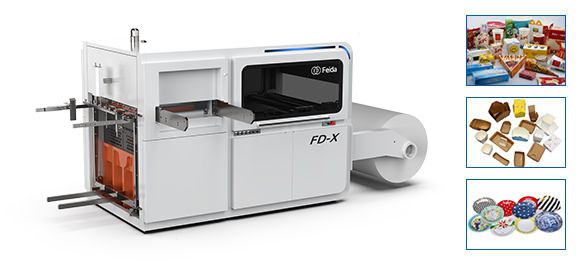
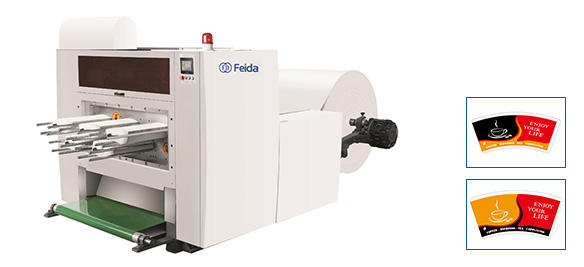
The machine is designed to handle a wide variety of disposable container formats. The FDYC series, for example, is widely used for paper cup, paper bowl, and paper plate production. Beyond these core applications, the same basic platform supports trays, clamshells, portion cups, and multi-compartment containers. The key is the die set—each container shape requires its own custom punching die, but the machine itself remains the same.
Bowls, Trays, Clamshells, and Portion Cups
From soup bowls to salad trays, the machine punches container blanks with consistent precision. The equipment is suitable for roll paper thickness of 150-350 gsm for rapid and precise punching, collecting, and stripping simultaneously. The flexibility to switch between different container types makes it a versatile investment for manufacturers serving multiple market segments.
Multi-Compartment Containers
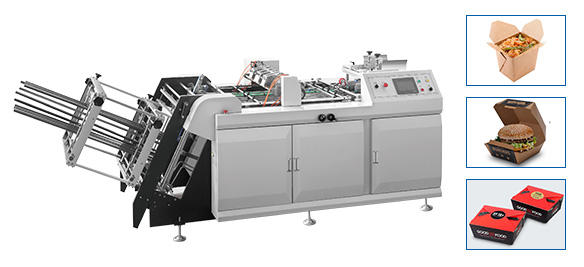
For takeout boxes with separate compartments for entrees and sides, the machine handles complex blank geometries with the same speed and accuracy as simpler shapes—as long as the die is properly designed.
Beyond Paperboard – What Else Can Go Through the Die?
Paperboard is the primary material, but the machine's material compatibility extends well beyond standard board. The FDYC series handles a range of substrates, with the broader Feida roll die punching platform supporting 150-600gsm board and paperboard across different models.
Aluminum Foil Laminates
For containers requiring a foil barrier—such as instant-noodle bowl caps and certain food packaging lids—the machine is compatible with 60-120g aluminum foil materials. This opens up applications in the frozen food and ready-meal sectors where foil-lined containers are common.
PLA-Coated Board and Bioplastics
As the industry shifts toward compostable and sustainable materials, the machine handles PLA-coated board and certain bioplastics. Always confirm with your supplier that the specific material runs well on the machine, but the platform is designed with the flexibility to accommodate evolving material requirements.
Continuous vs. Batch – Why the Difference Matters for Your Output
The difference is fundamental: one is continuous, the other is batch. A manual flatbed press processes one sheet at a time—operators load, punch, strip, and unload in discrete steps. An automatic roll die punching machine runs continuously from a roll-fed web, with punching, stripping, and collecting happening in a single, uninterrupted flow.
Continuous vs. Batch Processing
The roll-fed design means the machine never stops for sheet loading. Material feeds from a roll, passes through the punching station, and exits as finished blanks. This continuous operation dramatically increases throughput compared to batch processing.
Higher Output and Integrated Stripping
With speeds of 60-180 containers per minute on single-lane configurations and up to 300 containers per minute on double-lane models, the output gap is substantial. Integrated stripping eliminates a separate manual or semi-automatic step, reducing labor requirements and speeding up the overall process.
How Fast Can It Actually Run in Real Production?
Production speed depends on container size, material thickness, and the number of lanes. The ZX-1200 single-lane configuration runs at 60-180 boxes per minute. The ZX-2000 double-lane configuration reaches 100-300 boxes per minute, depending on box size and material.
Factors That Affect Speed
Larger containers and heavier materials (up to 600gsm) typically run at the lower end of the speed range. Smaller, lighter containers can run at maximum speed. The double-lane design effectively doubles output without doubling floor space.
Real-World Throughput
For a typical paper bowl production line, 100-150 containers per minute is achievable with consistent quality—translating to tens of thousands of blanks per shift.
Die Change Time – What to Expect When Switching Sizes
Die change time is a critical factor for production flexibility. For an experienced operator, changing dies for a different container size typically takes 20-40 minutes. The exact time depends on die weight, accessibility, and the operator's familiarity with the changeover procedure.
Quick-Change Features
Modern roll die punching machines incorporate design features that speed up die changes—quick-release clamping, alignment pins, and standardized mounting interfaces. These reduce downtime between jobs and make short production runs more economical.
Planning for Changeovers
For manufacturers running multiple container sizes, scheduling die changes during planned downtime or shift changes minimizes the impact on overall production.
Maintenance That Keeps the Line Running – What's Different Here
While roll die punching machines share many maintenance requirements with other industrial equipment, several tasks are specific to the high-speed, continuous nature of the process.
Lubricating Cam Followers
Cam followers and other moving parts in the punching mechanism require regular lubrication to prevent wear and maintain precision at high speeds.
Checking Timing Belts
Timing belts that synchronize the feeding and punching mechanisms must be inspected regularly for tension and wear. A slipped belt can cause misregistration and waste.
Inspecting Stripping Fingers
Stripping fingers remove the finished blank from the die. Worn or misaligned fingers can cause jams or damaged blanks. Regular inspection and replacement are essential.
Glue System Maintenance
For inline flexo printer configurations, the glue system requires its own maintenance—cleaning nozzles, checking viscosity, and ensuring proper water-glue temperature.
Print Registration – How the Machine Handles Pre-Printed Rolls
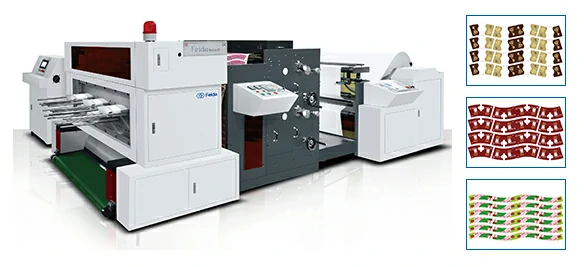
Yes—but only if the machine has a register control system and print mark sensors. The FDYC series, which integrates a flexo printer inline with the punching station, is specifically designed to handle pre-printed or inline-printed rolls with accurate registration.
Register Control System
The register control system uses optical sensors to detect print marks on the web. It adjusts the feeding speed dynamically to ensure the punch occurs at the correct position relative to the printed graphic.
Print Mark Requirements
For successful registration, the printed roll must include registration marks at consistent intervals. The machine's sensor reads these marks and maintains alignment throughout the run.
Safety That's Built In – What Protects Operators at High Speed
Automatic roll die punching machines operate at high speed with significant force, making safety features non-negotiable.
Light Curtains
A light curtain creates an invisible barrier around the danger zone. If the beam is interrupted, the machine stops immediately.
Emergency Stop Cables
Emergency stop pull-cords or push-buttons are positioned at multiple points around the machine for quick access in an emergency.
Guarded Die Area
The die area is fully guarded to prevent operator access during the punching cycle. Interlocked guards stop the machine if opened while running.
Combined vs. Dedicated – Which Configuration Fits Your Floor and Workflow?
This is a common decision point for container manufacturers. A combined unit integrates punching and stripping in one machine, while a dedicated stripper handles stripping separately.
Combined Unit Saves Floor Space
A combined unit has a smaller footprint—one machine does both jobs. This is ideal for facilities where floor space is limited.
Dedicated Stripper Offers More Flexibility
A dedicated stripper can handle a wider range of container geometries and may offer more precise control over the stripping process. For manufacturers running highly varied product lines, the additional flexibility can justify the extra floor space.
ROI Timeline – What a Small to Medium Plant Can Realistically Expect
For a small to medium container plant operating two shifts, the ROI on an automatic roll die punching machine is typically 12-18 months. This range reflects the combination of increased output, reduced labor, and lower unit costs.
Key ROI Drivers
Labor savings are significant—the continuous, automated nature of the machine reduces the number of operators required per shift. Higher output means more containers per hour, spreading fixed costs across more units. Material waste is also lower due to precise punching and integrated stripping.
Factors That Accelerate ROI
Two-shift operation, high material utilization, and consistent order volumes all contribute to faster payback. Manufacturers running three shifts can expect even shorter ROI periods.
Operator Training – What's Included and How It's Delivered
Most manufacturers offer comprehensive training programs. Feida Machine provides on-site training for operators, covering everything from glue viscosity setting to nozzle cleaning.
On-Site Training
The manufacturer's technicians come to your facility and train your operators on the specific machine configuration. This ensures training is tailored to your actual production environment.
Remote Training and Support
Beyond initial training, many manufacturers offer remote troubleshooting and technical support. For ongoing questions, a combination of on-site training and remote support keeps your team up to speed.
Quick Answers to the Most Common Questions About This Equipment
What types of disposable containers can be made with this machine?
Bowls, trays, clamshells, portion cups, and multi-compartment containers—paper cups, paper bowls, and paper plates are the most common applications.
What materials are compatible besides paperboard?
Aluminum foil laminates (60-120g), PLA-coated board, and certain bioplastics.
How does an automatic roll die punching machine differ from a manual flatbed?
Continuous vs. batch processing—higher output, integrated stripping, and reduced labor.
What is the typical production speed for bowl blanks?
60-180 containers per minute (single lane), up to 300 containers per minute (double lane).
How long does it take to change dies for a different container size?
20-40 minutes for an experienced operator.
What maintenance tasks are unique to a roll die punching machine?
Lubricating cam followers, checking timing belts, inspecting stripping fingers, and glue system maintenance.
Can I run printed rolls without registration issues?
Yes—with a register control system and print mark sensors.
What safety features are required for automatic operation?
Light curtains, emergency stop cables, and guarded die area.
How to choose between a stripping machine and a combined unit?
Combined unit saves floor space; dedicated stripper offers more flexibility.
What is the expected return on investment for a small to medium container plant?
Typically 12-18 months for two-shift operation.
Let's Match a Roll Die System to Your Container Line Goals
Selecting a roll die punching machine comes down to three factors: container types (match your product line), production speed (match your volume targets), and material compatibility (match your substrate). Contact Feida Machine for material testing and a customized quote → —they can help you select the right configuration for your specific container production requirements.
Feida Machine is a manufacturer of roll die punching and container forming equipment, serving the disposable tableware and food packaging industries. The Roll Die Punching Machine inline Flexo Printer (FDYC Series) is based on international advanced technology and is widely used in paper cup, paper bowl, and paper plate production. The machine handles paper thickness of 150-350 gsm with speeds up to 300 containers per minute on double-lane configurations. Feida Machine provides comprehensive technical support, including on-site training, remote troubleshooting, and global spare parts availability. Connect with Feida Machine to discuss your container types, material requirements, and production volume targets.